This study room invites reflections on what AI for good actually means. It considers what types of issues AI could solve, as well as reflects on how tradeoffs may emerge on solving certain issues. They offer clear examples of how AI can be used to make a real world impact, and are also very obvious problems that nobody can object to. To that extent they reflects the moral lowest common denominator for AI for Good. The first source is a Dutch organization that uses AI to make real life impacts on things like and other obvious positive use cases. The second source is about the SDG goals and how AI impacts them either positively or negatively.
Check out how a group in The Netherlands is using AI to make real life impacts on things like oil spills and panda preservation.
To know more about AI for good, and its implications on the Sustainable Development Goals, explore the following platform which has resources, examples, and projects that you can study.
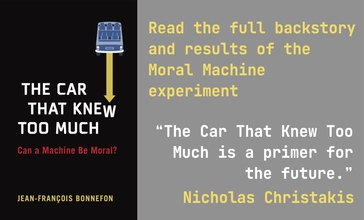
Can we however think critically about what AI for good really means? In “Moral Machine” an online platform developed by researchers at the Massachusetts Institute of Technology (MIT), users are presented with moral dilemmas involving autonomous vehicles. Users are prompted to make ethical decisions regarding hypothetical scenarios where autonomous vehicles must choose between different courses of action, raising important questions about ethics, technology, and decision-making in AI-driven systems.




 CivicAI