
Why the Module?
This module encourages you to reflect on how you can participate and shape discussions and discourses on AI. It aims to stimulate civic engagement with AI and gives some concrete ways to engage in the process, or gives motivation to do so.
What will it cover?
- Analyze local social, political, cultural, economic challenges
- Evaluate values of current AI solutions for local challenges
- Create or imaging desired futures with AI solutions and scenario

Thinking about how you as an individual want to apply AI is already difficult, but when it comes to engaging on a community level it gets even more complicated! Getting involved in AI on a community level can take many forms but there is one key: how AI is used is going to be determined by the types of people involved.
It is very important that the decision makers around AI reflect society, and that the voices of all parts of society are represented. Another basic prerequisite to get involved is transparency. If you live in a country with norms of transparency or accountability you can probably get in touch with your policy makers and petition for your rights. As a citizen you have a right to be heard and can actively contribute towards building the future that you see fit!
Our vision for AI is that AI shouldn’t just be for people but that it is also by people. Getting involved in deciding how AI should be used is the best way to ensure a fair, equal, and social application of AI!

Study Room
This study room provides reflection on why civic engagement is important around the use of AI.
Check out the following resource to reflect on what a human rights assessment for AI could look like. This approach is currently being piloted by the City of Amsterdam .
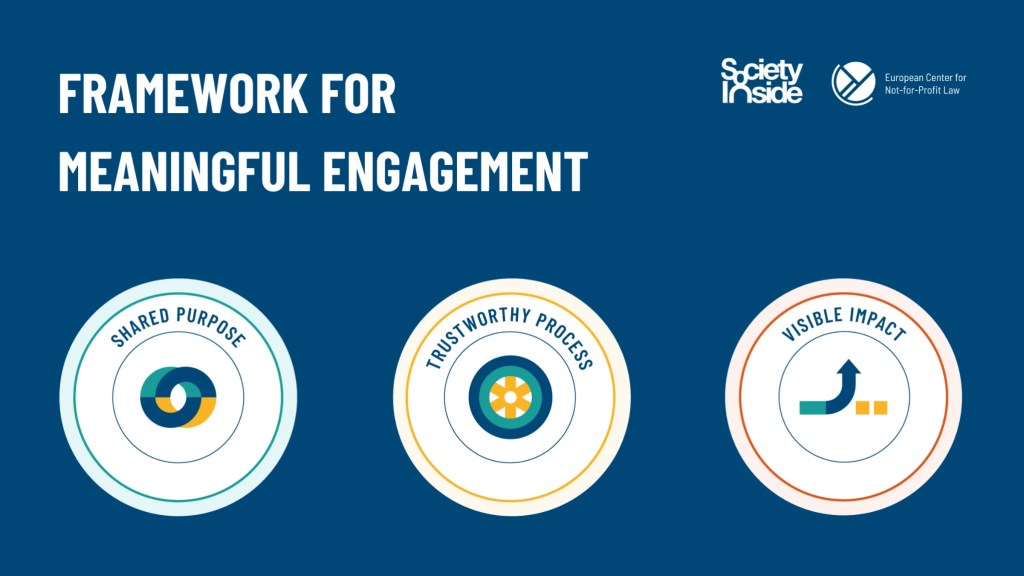
Can we make more conscious choices around AI? Check out these short essays about how AI choices and lack of civic involvement can negatively impact different groups.

In this article by UNDP, we explore the readiness of countries for artificial intelligence (AI) adoption and how they can ensure ethical and responsible implementation. It explores key considerations such as data privacy, transparency, accountability, and human rights in the deployment of AI technologies. The article also highlights the role of policymakers, civil society, and the private sector in shaping AI governance frameworks that prioritize ethical principles and safeguard against potential risks.

In another approach, Stanford’s Human-Centered Artificial Intelligence (HAI) initiative discusses the importance of prioritizing human-centric values and ethics in the development and deployment of AI technologies, aiming to address societal concerns and ensure positive outcomes from the AI revolution.


Activity Room
Co-Creating an AI Manifesto
Get together in a group of your classmates, friends, family, co-workers, etc.
Objective: To collaboratively draft a manifesto outlining the group’s collective principles and aspirations for influencing the development of AI in ways that align with their shared interests.
Materials Needed:
Whiteboard
Markers
Sticky notes
Space for group discussions

Introduction
(10 minutes)
Welcome participants and provide a brief overview of the activity’s objective.
Explain the importance of collectively shaping AI development to align with their shared values and interests.
Icebreaker Discussion
(15 minutes)
Facilitate a brief icebreaker discussion to allow participants to share their thoughts and concerns about AI. Encourage them to express their individual perspectives and experiences.
Brainstorming Session
(40 minutes)
Ask the group to respond to the following questions and jot down responses on the whiteboard.
- What ethical principles should guide the development and deployment of AI technologies?
- How can AI systems ensure fairness and avoid discrimination in various contexts?
- What level of transparency should be demanded from companies and organizations developing AI?
- How can we ensure accountability when AI systems make decisions impacting individuals or communities?
- What measures should be in place to protect individuals’ privacy in the era of AI?
- How can AI systems be designed to prioritize data security and minimize risks of breaches?
- How can AI be harnessed to address societal inequalities and promote inclusivity?
- What steps should be taken to ensure that AI benefits all segments of society?
- In what ways can AI enhance human capabilities and collaboration?
- How should AI be integrated into daily life without replacing human roles?
- What educational initiatives are needed to prepare individuals for the evolving landscape of AI?
- How can we ensure that AI technologies are accessible to people of all skill levels?
- How can AI development contribute to environmental sustainability?
- What measures should be taken to minimize the carbon footprint of AI technologies?
- How can international collaboration foster responsible AI development and usage?
- What role should global communities play in shaping ethical AI standards?
- What kind of legal and regulatory frameworks are essential for governing AI technologies?
- How can we strike a balance between innovation and regulation in the AI space?
Consolidation
(10 minutes)
Identify common themes and overarching principles that resonate with the entire group.
Drafting the Manifesto
(30 minutes)
Collaboratively draft the manifesto on the whiteboard.
Allow participants to contribute key points, principles, and aspirations.
You can use some the following prompts to shape you manifesto’s principles:
- “In a world where technology shapes our daily lives, our manifesto envisions…”
- “Reflecting on our shared values, we declare our commitment to…”
- “As advocates for positive change, we stand united in our belief that…”
- “In pursuit of a better future, we affirm our dedication to…”
- “Inspired by our collective vision, we boldly proclaim our manifesto for…”
- “Upholding the principles of equity and justice, our manifesto calls for…”
- “Driven by a shared purpose, we articulate our manifesto to advocate for…”
- “As stewards of progress, we set forth our manifesto to champion…”
- “In the spirit of collaboration, we present our manifesto as a call to action for…”
- “Embracing the challenges of our time, our manifesto outlines our commitment to…”
Review and Refinement (15 minutes)
Review the drafted manifesto as a group.
Encourage participants to suggest edits or additions to ensure inclusivity and clarity.
Finalization (10 minutes)
Finalize the AI Manifesto based on the group’s consensus.
Discuss potential next steps for sharing or promoting the manifesto within and beyond the group. You may want to circulate it amongst your wider network or share it with your local representatives and/or policymakers.

Reflection Room
Who decides how AI is used, is it an elected official?
Who protects you if you are disadvantaged by an AI?
Are the current institutions governing AI adequate or do they need to be changed?
Related Modules
Other Explorer Modules

 CivicAI