
Why the Module?
This module will help you understand both the development of modern AI, as well as the conceptual development of AI throughout (ancient) history.
What will it cover?
- History of modern AI
- Ancient references to robots and automatons
- Why AI is exploding right now

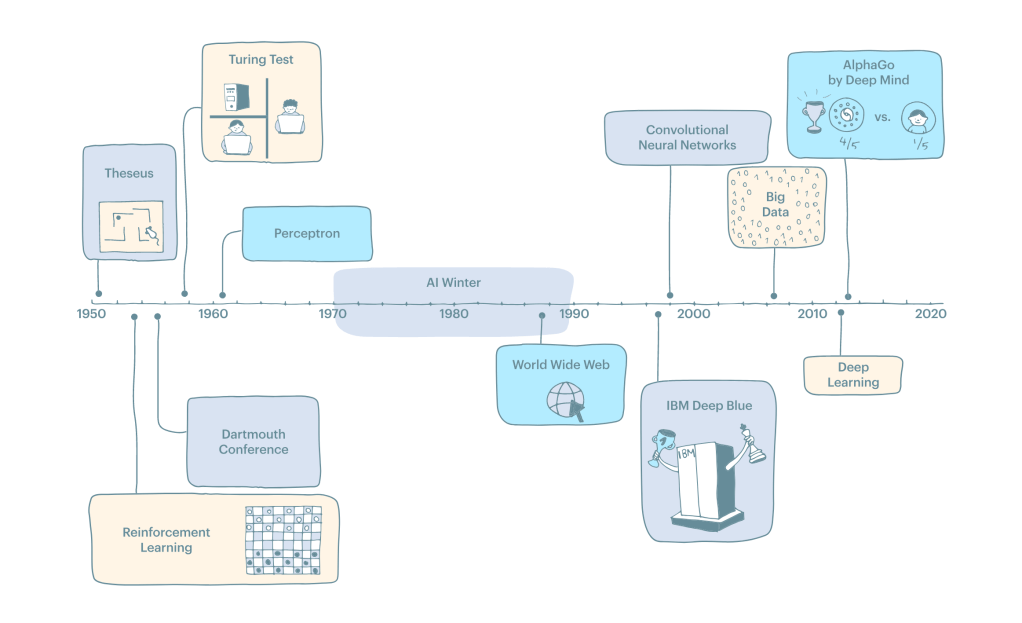
As exciting and new as AI is, the term was already introduced in the 1950s! The birth of modern AI was at the Dartmouth workshop in the summer of 1956, with the goal of reproducing human intelligence in machines. The attendants said that it would only take a couple of years to figure it out…
While 1956 is where modern AI was first coined, the idea of making ‘artificial beings with consciousness and intelligence’ goes way back. The ancient Greeks had stories about “handmaidens wrought of gold in the semblance of silver maids”, Tang dynasty Chinese sources mention imitation humans and animals, and the Vedas from India also talk about ancient automatons! The desire to build human-like objects is one of the oldest recorded goals of humanity, and with AI we are potentially closer than ever.
Do you think that the goal of recreating humans will ever be attained? And do you think that’s a good or a bad thing…?

Study Room
The goal of this study room is to recognize key moments in the history of AI from the 1950s until today, recognize current AI developments, and understand the broad approaches of AI. The following resources document the history of the development of AI – some start from 1956 and follow the Dartmouth Workshop, others take an ancient historical view.
Read the following resource to understand the critical moments in the story of modern AI that led us to ChatGPT.
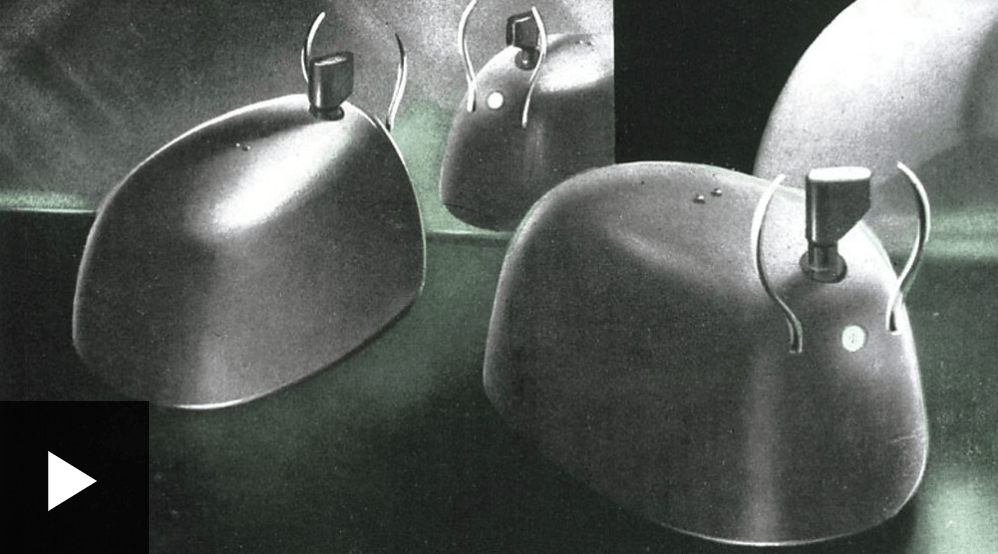
Read the following resource to think about how, over the course of human history, we have worked towards something like AI, even if we did not call it that at the time
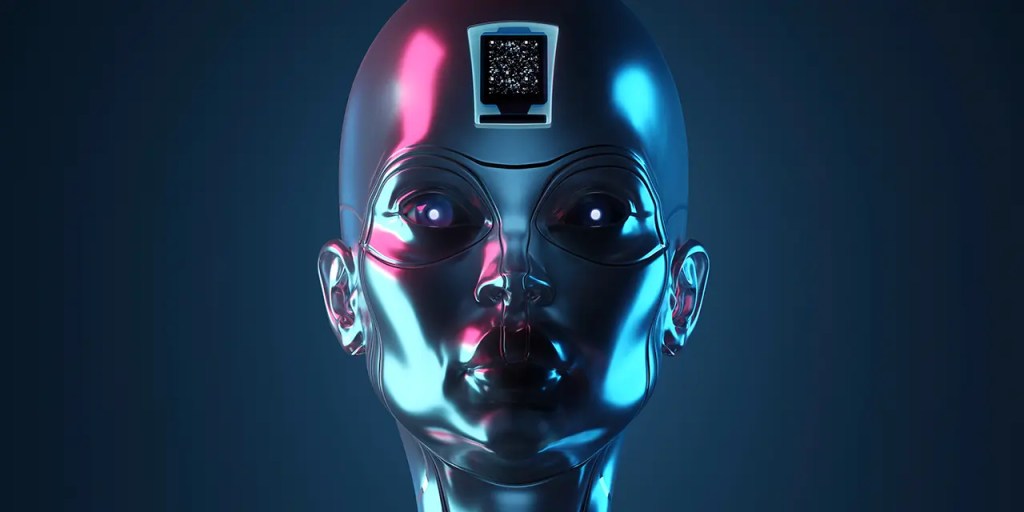
If you’d like to dive into another overview of the history of AI, have a look at this resource which traces the development of AI from early concepts and milestones to modern advancements. It explores key events, breakthroughs, and the evolution of AI technologies over time.
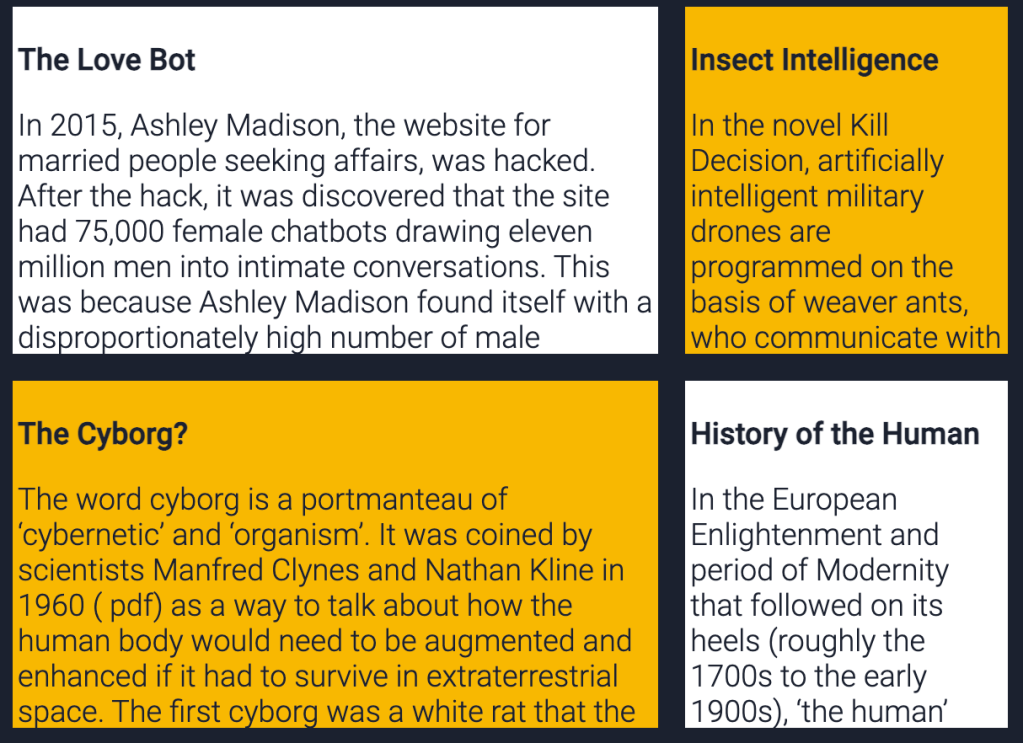
Now that we know how AI has come to be, let us look at some interesting ways in which the meaning behind common AI terms and concepts is evolving in contemporary times.

Activity Room
If you’ve had a chance to go through some of the reading material in the Study Room, try your hand at this crossword which is inspired by key developments in the history of AI.
Inclusive AI Timeline Rewrite
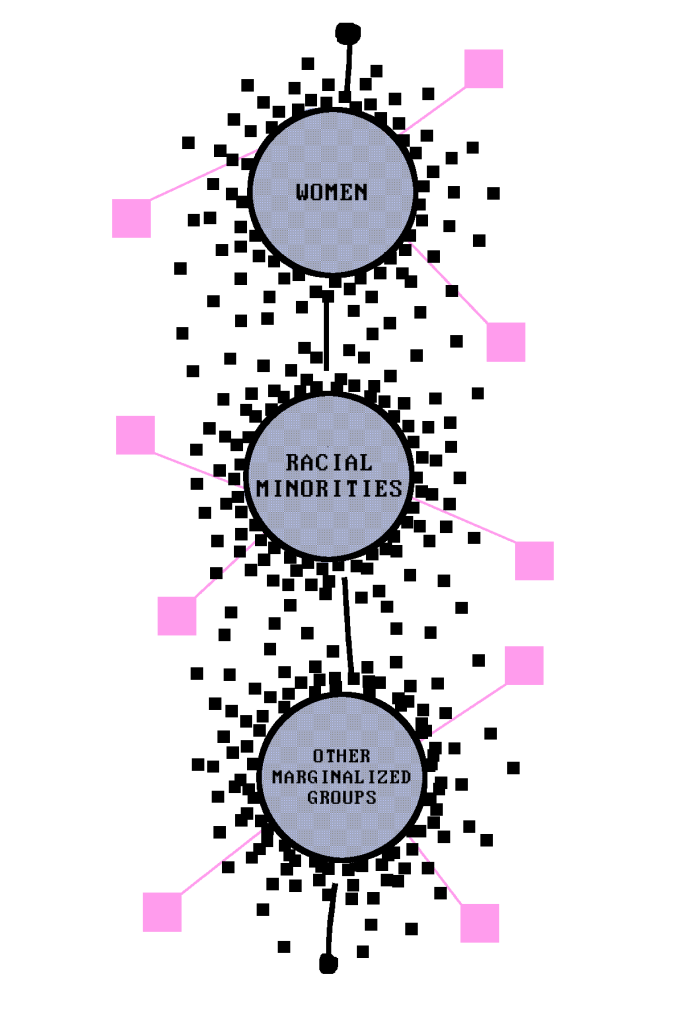
Objective: Encourage participants to create a more inclusive and diverse timeline of AI development by highlighting the contributions of individuals often underrepresented in the narrative, such as women, racial minorities, and other marginalized groups.
Materials Needed:
1. Whiteboard or large paper sheets
2. Markers, pens, or digital tools for drawing/writing
3. Reference materials on diverse contributors to AI (optional)
Moderation: This activity would be best suited to be carried out under the guidance of a moderator; this could be a teacher, a parent or a community leader.
Introduction
(10 mins)
Begin with a brief overview of the history of AI, emphasizing the key figures and milestones traditionally highlighted in mainstream narratives that you can refer to in the material provided in the Study Room.
Discussion
(15 minutes)
Facilitate a discussion on the importance of recognizing diverse contributions to AI and the potential impact of underrepresentation. Encourage participants to share any lesser-known stories they are aware of.
Brainstorming
(10 minutes)
Ask participants to brainstorm a list of individuals from underrepresented groups who have made significant contributions to AI. This can include scientists, researchers, engineers, and activists.
Timeline Creation
(30 minutes)
Divide participants into small groups or pairs. Provide each group with a section of the timeline (either specific years or decades) to focus on.
Research and Rewrite
(20 minutes)
Encourage participants to conduct brief research on the individuals they’ve identified and their contributions to AI. Participants should then rewrite the timeline, integrating the stories of these often-overlooked figures.
Group Presentation
(15 minutes)
Each group presents their revised timeline, explaining the importance of the added contributions and the impact of a more inclusive perspective on AI history.
Reflection and Discussion
(15 minutes)
Facilitate a group reflection on the activity. Discuss how incorporating diverse perspectives enhances our understanding of AI history and the potential benefits of a more inclusive narrative.

Reflection Room
Do you think the desire to have something like AI is new?
Do you see this as the logical next step in human history?
Related Modules
Other Learner Modules
 CivicAI