
Why the Module?
Understanding a working definition and a way to subdivide AI is a critical foundation for the next modules.
What will it cover?
- Understanding the goal of AI
- Reflecting on why it is called AI, and not something else
- bUnderstanding AI terms
- Reflecting on what is required for something to be intelligent

AI is extremely useful! (Otherwise we wouldn’t be so interested in it.) We already talked about how AI can help you make your way through the data intensive world we live in, but let’s look at some more examples of useful AI! One of the biggest advantages of AI is that it can help scientists do their work faster! The most famous example is an AI called AlphaFold, which helps us predict how proteins fold (If you don’t know what is, check out this video!) which allows scientists to develop medicine!
But you are probably not a scientist, so how does AI help you in your daily life? Well, it probably helps you write texts or emails, it helps you get to where you want to go faster by helping you navigate, and it lets you unlock your phone by just looking at it! AI also helps you find better matches on dating apps, or help you find products that you may want to buy, and find interesting videos for you to watch.

Study Room
The goal of this module is to help you be able to name a couple of notable AI examples that are useful, understand the utility of AI in science and help you think about what else AI can be used for.
Check out this video about AlphaFold and how it has accelerated scientific discovery. It highlights a little about how AI works and why the problem of protein folding is such a difficult and scientifically valuable problem. We hope that it conveys the real benefits of AI both individually and societally.
This article by The Conversation explores the application of AI in the design of engaging and interactive public art. It discusses how AI technologies can enhance creativity and collaboration in the creation of public art installations, fostering unique experiences and interactions for audiences.

Even as you are thinking of how AI transforms lives in positive ways, it is important to keep in mind that policymakers, scientists, governments and many others try to keep in mind the risks that come along with the benefits of AI applications. This report by UN-Habitat in collaboration with Mila – Quebec Artificial Intelligence Institute looks at how AI is deployed in cities, the ways in which its use can bring about certain risks, and how to develop strategies to deal with these risks.


Activity Room
Your phone is a constant part of your interactions for socializing, for work, for business. In this activity, we would like you to read about the Data Detox Kit, and the Data Diet. Are there any activities you can try? Can you do a full cleanse of your datafied life?
If you want to start slowly, how about planning an outing with your friends and family without a phone? What would you need to do? How would you contact them? How would you capture the outing? How would you pay for the outing?


You may have definitely come across or at least heard of ChatGPT by now. Let’s see what kind of impact- positive or negative, that it has had in our lives.
- Get together in a group in your classroom, or with your friends and family.
- Watch this video by Vox on how AI has changed the lives of students, who use ChatGPT in their academic journey.
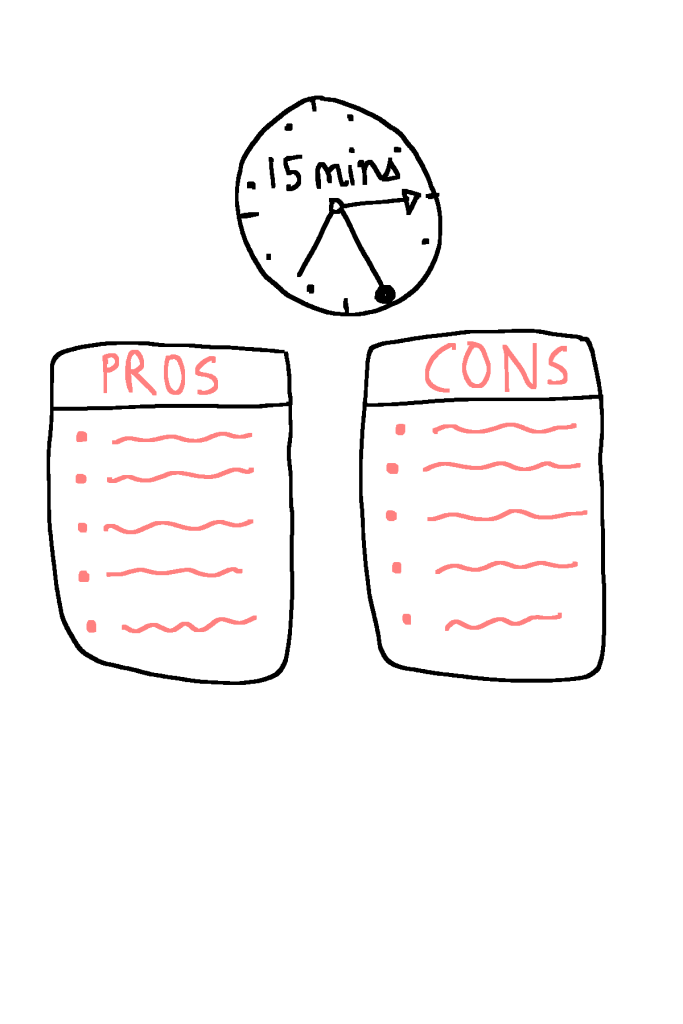
- Divide the group into two halves- the Pros Team and the Cons Team.
- One side will watch the video and list all the pros of using ChatGPT for homework, office work, or any other tasks. The other side will watch the video and list all the cons.
- Take 15 minutes to discuss and make your lists.
- At the end of the 15 minutes, compare your lists.
- Who won? The Pros Team or the Cons Team?

Reflection Room
Can you think of a problem you have in your daily life that AI could help with?
Can you think of any negative applications of AI?
Can you imagine what sort of AI applications might exist in the future?
Related Modules
Other Learner Modules
 CivicAI